Towards Learning Whole-Body Mobile Manipulation for Grasping Any Object Anywhere
Jason Liu, Changwei Yao, Andrew Wang
Carnegie Mellon University
Full System Demo
Teaser
Abstract
Generalizable whole-body mobile manipulation is challenging because robots must coordinate navigation, active perception, collision avoidance, and dexterous interaction under partial observability. In this project, we present a fully simulation-based framework for learning mobile dexterous grasping without human demonstrations.
Our key idea is to decompose the task into free-space motion and contact-rich local interaction. A GPU-vectorized whole-body controller coordinates end-effector reaching, active vision, and collision avoidance, while local reinforcement learning policies focus on dexterous contact behavior near the object.
We then distill these controller-guided teachers into a single vision-based student policy that directly controls the mobile base, arm, hand, and active camera from onboard point clouds and proprioception. The resulting policy demonstrates robust whole-body grasping behavior across diverse objects and scenes.
System Overview
Platform
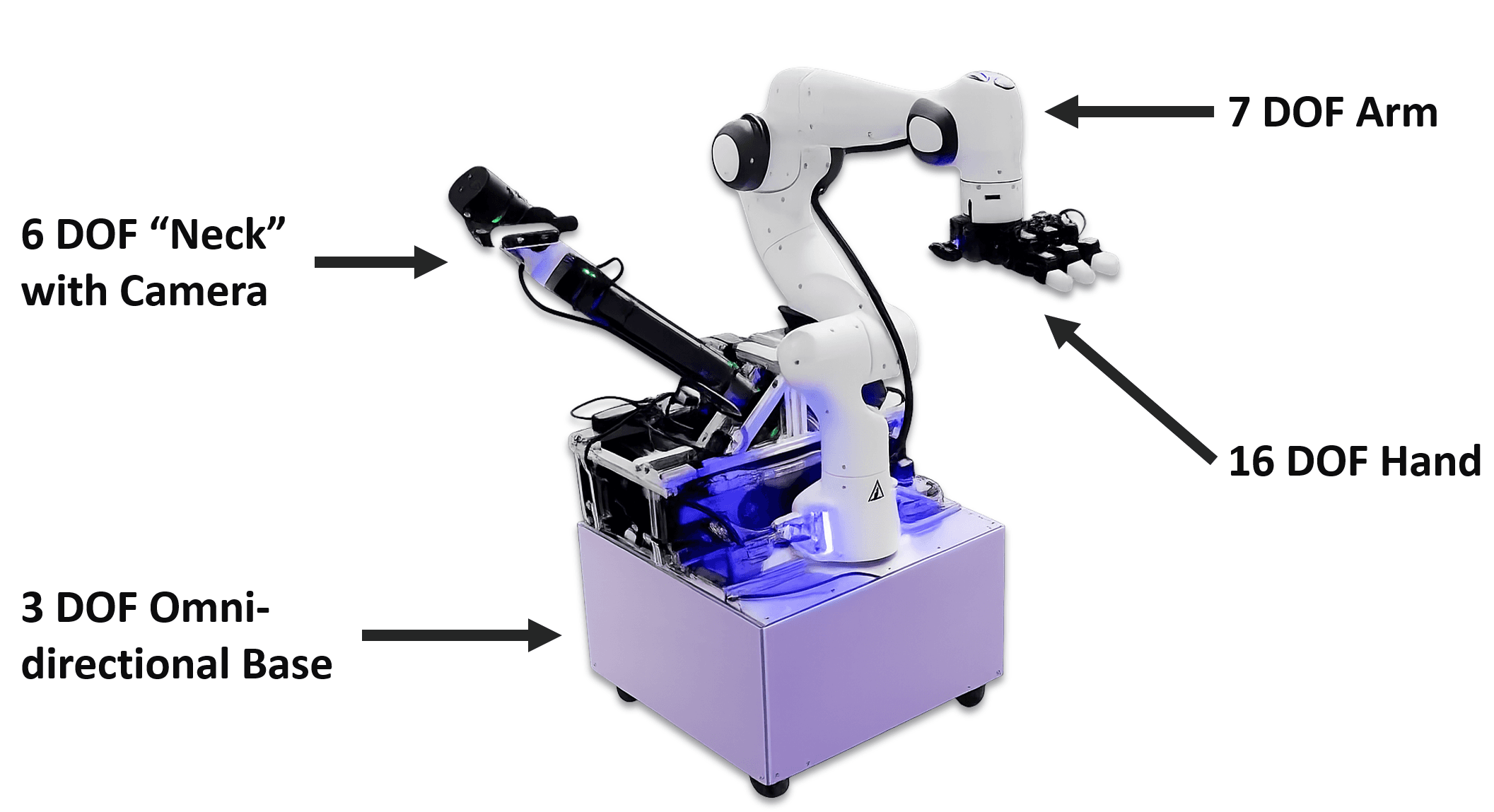
Our 32-DoF platform combines a holonomic mobile base, 7-DoF arm, 16-DoF dexterous hand, and a 6-DoF active-vision neck carrying an Intel RealSense D435 camera, together with onboard Unitree L2 3 LiDAR for scene geometry.
Free-Space Control
Controller
We first solve the free-space phase with a GPU-vectorized whole-body controller. It coordinates end-effector reaching, active camera gaze, and collision avoidance before contact, so learning does not need to rediscover these high-level whole-body behaviors from scratch.
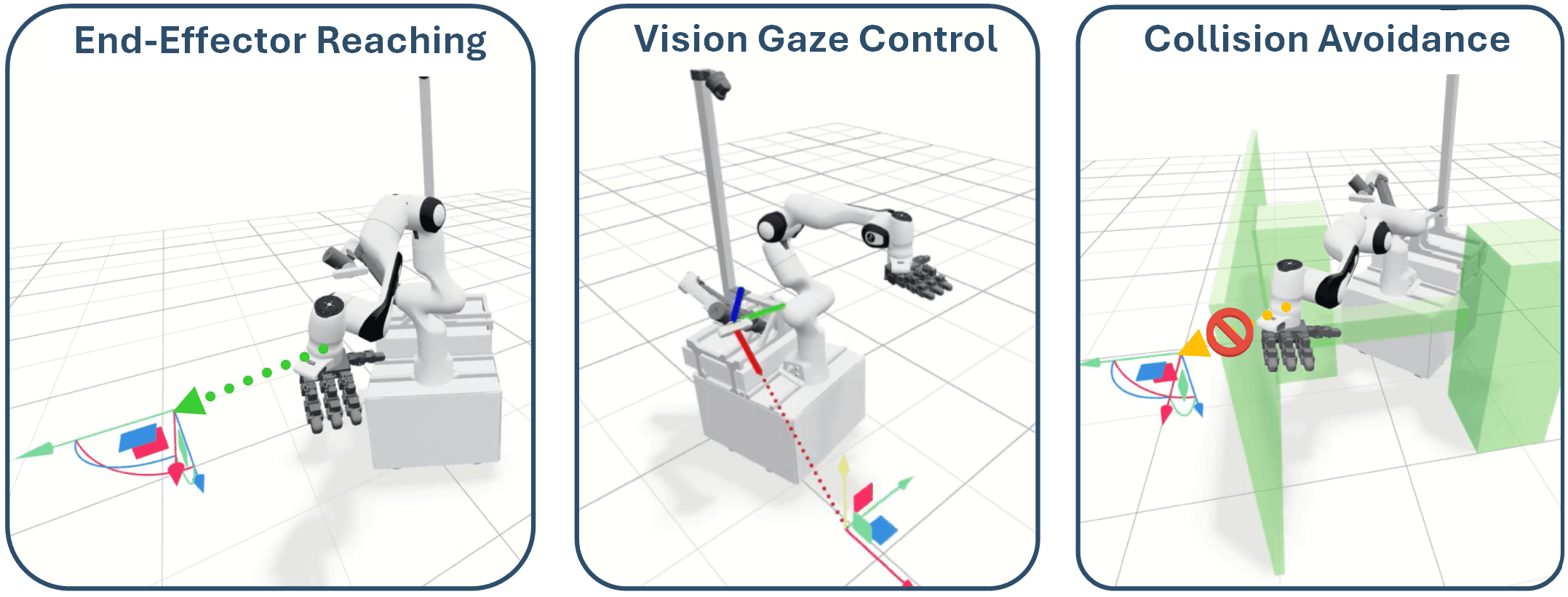
The controller provides geometric priors for whole-body motion, aligning the end effector, keeping the target in view, and avoiding collisions throughout the approach phase.
Local RL Policy Training
Contact-Rich Interaction
These local teacher policies specialize in short-horizon dexterous interaction near the object. By training the final grasp stage separately, the overall learning problem becomes substantially more stable and data efficient.
WBC Policy Rollout
Data Collection
Distillation Pipeline
Method Overview
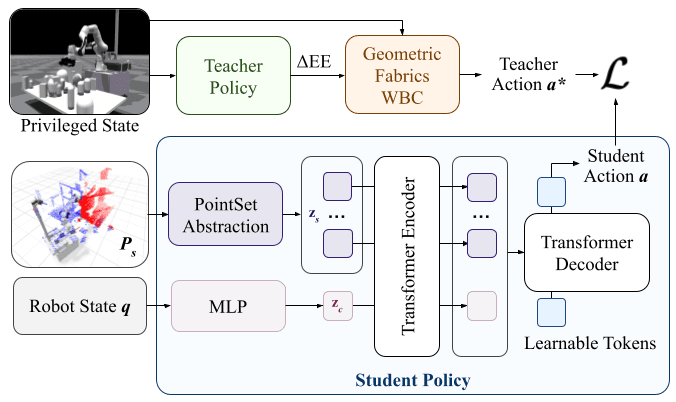
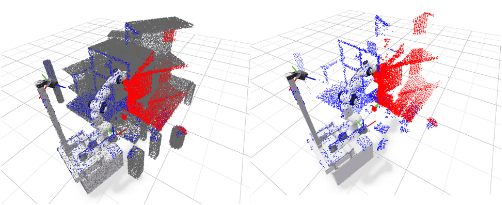
Teacher rollouts from the whole-body controller and local dexterous policies are distilled into a single student that acts from onboard point clouds, proprioception, and target conditioning.
Qualitative Results
Final Policy
The final distilled policy exhibits active vision and robust whole-body grasping across both single-object and multi-object scenarios.
Single-Object Active Vision
The robot actively reorients the camera to keep the target visible during approach and pre-grasp alignment.
Multi-Object Picking
A single whole-body policy generalizes across objects and cluttered arrangements while preserving safe motion.
Simulation Ablations
Quantitative Results
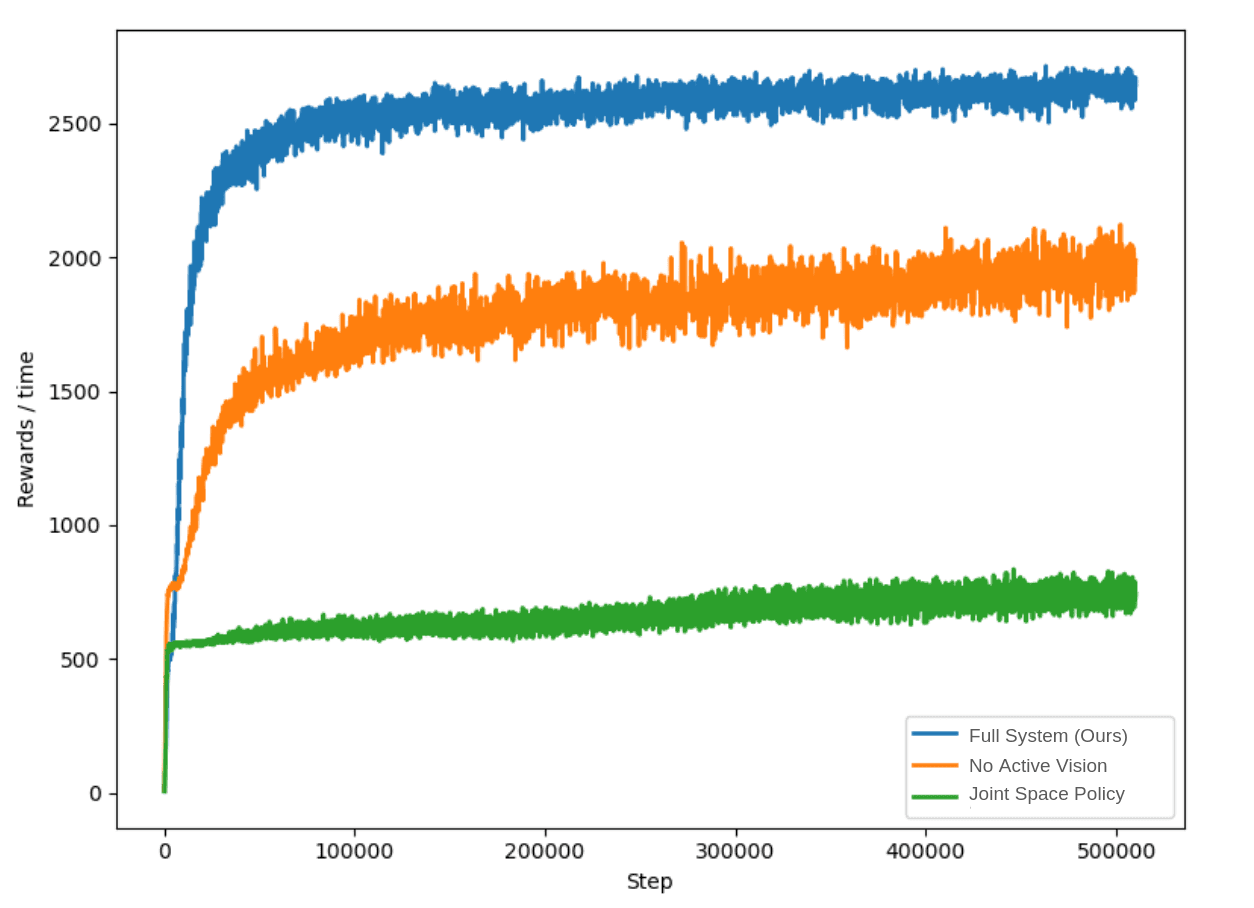
Training Reward
The full controller-guided system reaches the highest reward, while removing active vision or directly learning joint-space control leads to worse optimization.
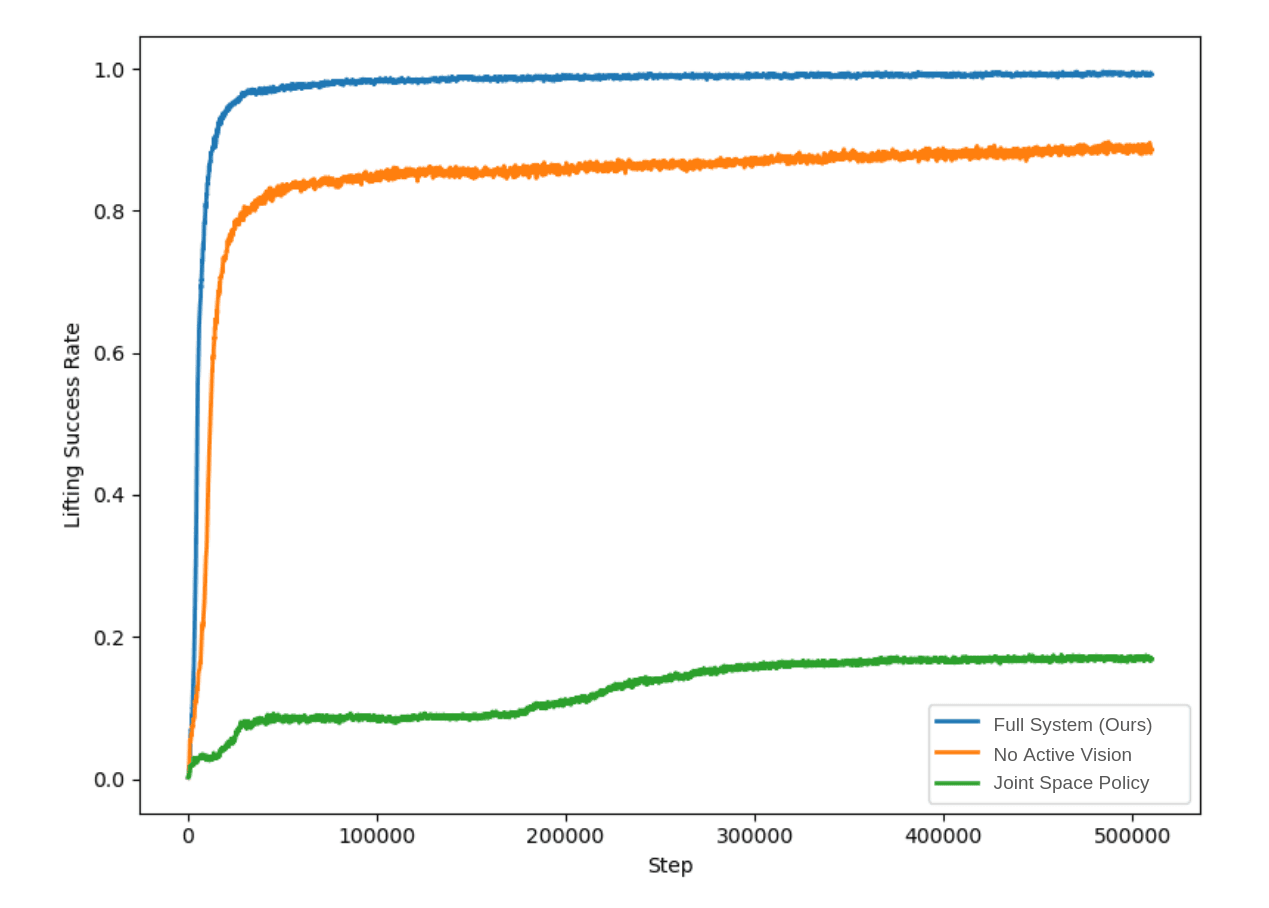
Lifting Success Rate
Active vision and structured whole-body control both matter: the full system reaches near-perfect lifting success, while direct joint-space learning trails far behind.